

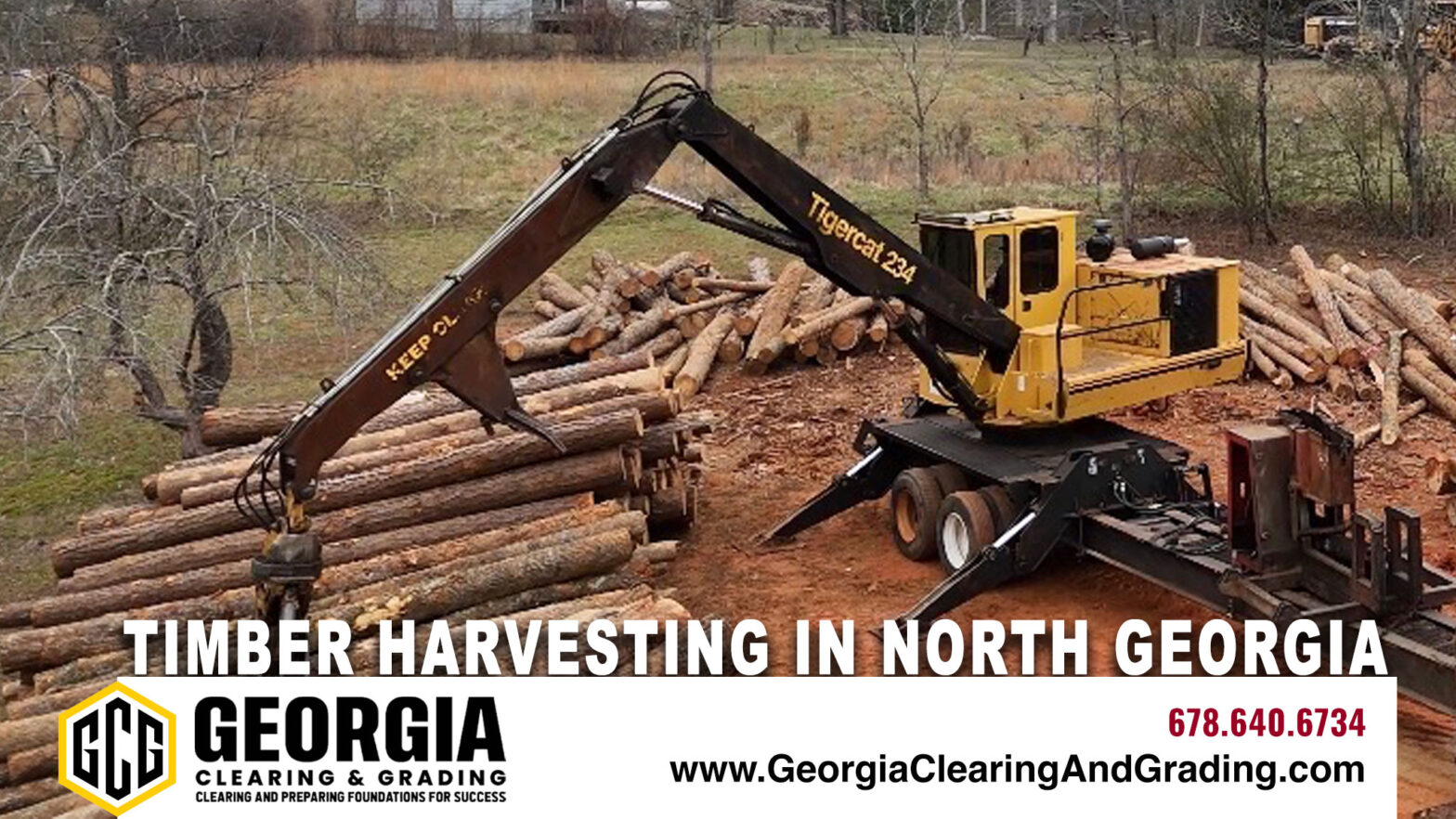
North Georgia is defined by its robust forestry and rolling landscapes. For landowners in this region, timber represents more than just scenery; it is a significant financial asset and a critical component of environmental stewardship. Managing this asset effectively requires a strategic approach known as timber harvesting or logging.
Timber harvesting serves multiple functions, ranging from immediate financial gain to long-term ecological preservation. Whether the objective is to clear land for a new development project or to curate a healthier forest ecosystem, understanding the mechanics and benefits of harvesting is essential. Professional execution ensures that landowners can achieve their goals while adhering to environmental standards and Best Management Practices (BMPs).
This guide examines the strategic role of timber harvesting for property owners in North Georgia. It outlines the economic incentives, the impact on property valuation, and the vital role logging plays in forest sustainability and site preparation.
Understanding Timber Harvesting in North Georgia
Timber harvesting involves the cutting and gathering of trees for commercial purposes. In North Georgia, where pine and hardwood forests are abundant, this practice is a cornerstone of the local agricultural economy. However, successful harvesting requires more than heavy machinery; it demands a deep understanding of silviculture—the science of controlling the establishment, growth, composition, health, and quality of forests.
For landowners, harvesting fits into a broader land management strategy. It acts as a tool to transition land from one state to another. This might mean converting a dense, unmanaged woodland into a productive timber stand, or clearing acreage to pave the way for residential or commercial grading. Professional contractors utilize specialized equipment to execute these operations efficiently, minimizing soil disturbance while maximizing the yield of the harvested material.
The Economic Benefits of Harvesting
The most immediate motivation for timber harvesting is the generation of revenue. Trees are a renewable resource that, when marketed correctly, provide a substantial return on investment.
Generational Revenue Streams
Mature timber stands represent a significant accumulation of biological capital. By harvesting these trees, landowners convert standing inventory into liquid assets. The revenue generated depends on several market factors, including the species of timber (pine vs. hardwood), the product class (pulpwood vs. sawtimber), and current market demand in the North Georgia region. A professional assessment can help landowners time their harvest to align with favorable market conditions, ensuring the highest possible return.
Funding Land Improvements
The income derived from selling timber often serves as seed money for future projects. Landowners frequently utilize harvest proceeds to fund capital improvements such as road construction, drainage installation, or site grading. By reinvesting timber revenue back into the property, owners can further enhance the land’s utility and value without dipping into external operational budgets.
Enhancing Land Value through Management
Beyond the immediate cash flow from the sale of logs, timber harvesting is a proven method for increasing the long-term appraisal value of real estate. Unmanaged land often suffers from overcrowding, poor access, and aesthetic decline, all of which can negatively impact property valuation.
Improving Aesthetics and Accessibility
A selective harvest opens the forest canopy, allowing sunlight to reach the forest floor. This stimulates the growth of native grasses and creates a more visually appealing park-like setting. Furthermore, the logging process typically necessitates the creation or improvement of infrastructure, such as logging roads and skid trails. These improvements leave the landowner with better access to remote parts of their property, increasing its functional square footage and appeal to potential buyers.
Asset Valuation
Real estate appraisers and potential investors view well-managed timberland as a premium asset. A property that demonstrates a history of professional management—characterized by healthy tree spacing and productive growth—commands a higher market price than neglected acreage. Strategic harvesting signals to the market that the asset has been maintained with care and expertise.
Forest Health and Sustainability
Contrary to the misconception that logging is inherently destructive, responsible timber harvesting is essential for maintaining a healthy forest ecosystem. Left unchecked, forests can become overcrowded, leading to stagnation and susceptibility to environmental threats.
Thinning for Growth
Thinning is a specific harvesting technique used to reduce the density of trees in a stand. By removing smaller, weaker, or defective trees, resources such as water, sunlight, and soil nutrients become more available to the remaining high-quality trees. This reduction in competition accelerates the growth rate of the residual stand, producing larger, more valuable timber in a shorter timeframe.
Disease and Pest Mitigation
Overcrowded and stressed forests are prime targets for pests and diseases. In North Georgia, the Southern Pine Beetle is a notable threat to unmanaged pine stands. Strategic harvesting removes stressed trees that attract these pests, effectively creating a buffer that protects the broader forest. Additionally, clearing out dead or dying biomass reduces the fuel load on the forest floor, significantly lowering the risk of catastrophic wildfires.
Preparing Land for Development
Timber harvesting is often the first phase in the lifecycle of a development project. Before foundations can be poured or roads can be graded, the land must be cleared of organic obstacles.
Facilitating Construction
For landowners looking to develop residential subdivisions or commercial properties, removing timber is a functional necessity. Professional land clearing services integrate timber harvesting into the site preparation workflow. By recovering merchantable timber during the clearing phase, developers can offset some of the costs associated with grading and site development.
Environmental Compliance
Converting forested land for development requires strict adherence to environmental regulations, particularly regarding erosion control and water quality. Professional grading and clearing contractors are versed in local and state regulations. They ensure that the harvesting process utilizes proper erosion control measures, such as maintaining streamside management zones (SMZs), to protect local watersheds during the transition from forest to construction site.
Partnering with Professionals for Optimal Results
Timber harvesting is a complex operation that intersects economics, biology, and engineering. For North Georgia landowners, it represents a powerful tool for unlocking the value of their property. Whether the goal is to generate immediate income, improve the biological health of the forest, or prepare a site for grading and development, the execution requires professional expertise.
By engaging with trusted contractors who specialize in land management solutions, landowners ensure that their timber assets are handled with precision. From the initial assessment to the final haul, professional management guarantees that the project meets financial objectives while preserving the integrity of the land for future generations.
Effective land management is the foundation of property value and development potential. Whether you are a private landowner managing a timber investment or a developer preparing a site for a new community, the quality of the logging operation sets the tone for the entire project.
Partner with Georgia Clearing & Grading for reliable, professional logging and land management solutions. Contact us today to discuss your timber harvesting needs.
We would love to stay connected! Please follow us on your favorite Social Media.
Facebook | Instagram | LinkedIn | Our 5 Star Reviews
