

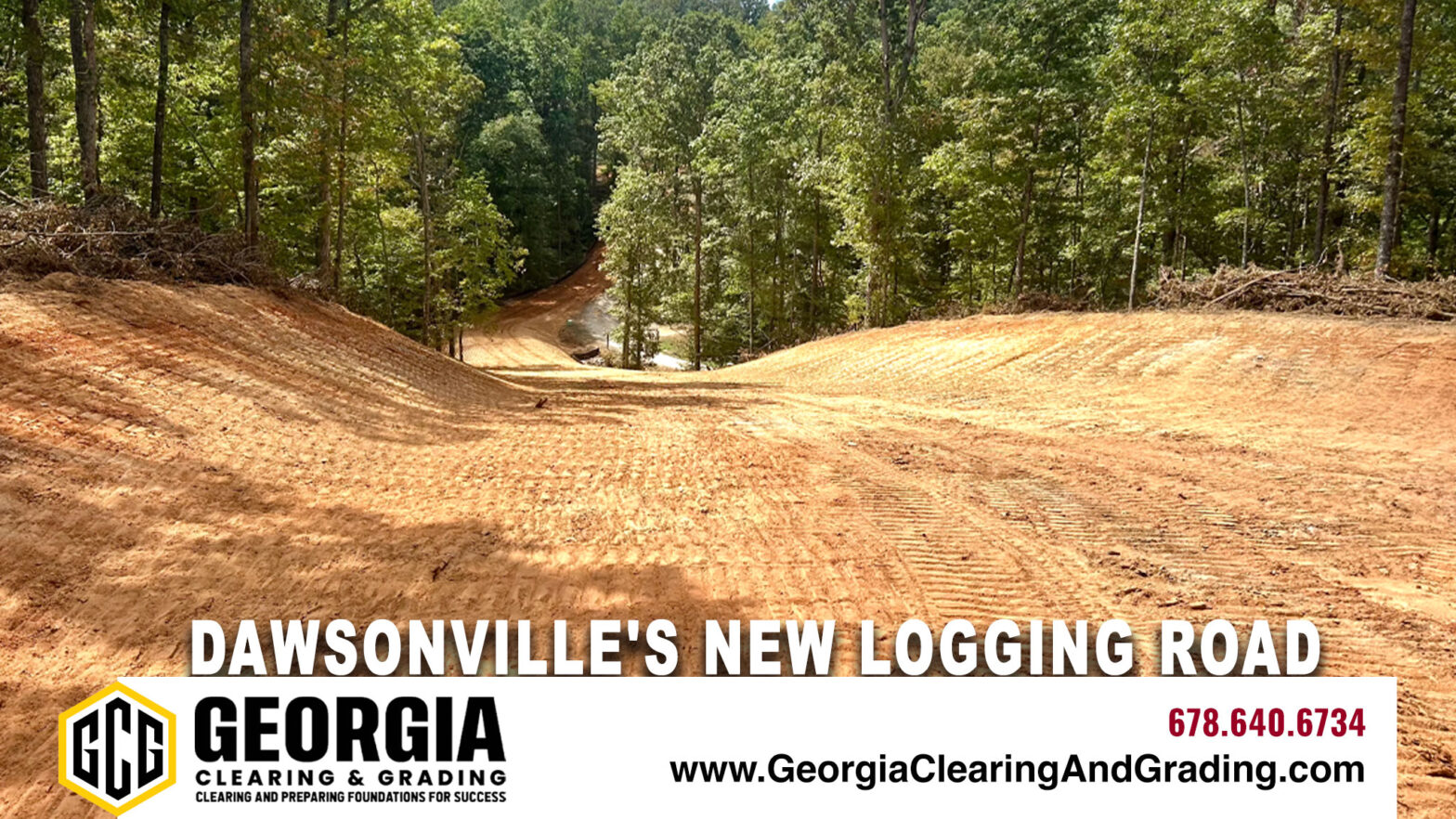
A new logging road in Dawsonville, Georgia is opening access to a site slated for future development. The road itself won’t make headlines, but it gives equipment and crews the access they need to clear land, move materials, and prepare the ground for what comes next. Infrastructure development almost always starts with unglamorous groundwork like this — long before construction begins.
Progress doesn’t always look like progress. Most people look for finished buildings, or paved roads full of traffic. They don’t picture a dirt path cut through the trees with no destination in sight yet. But that dirt path is often the first real step toward everything that follows.
In Dawsonville, Georgia, a new logging road is doing exactly that. It won’t turn heads today. It doesn’t need to. Its job is to open access — for the equipment that will clear the land, for Georgia Clearing & Grading crews who will clear the land, grade it, and for the materials that will eventually turn raw acreage into a functioning site.
What is a logging road, and why does it matter for development?
A logging road is a rough-graded access route built to get heavy equipment and vehicles into land that would otherwise be difficult to reach. It’s not paved. It’s not permanent in the way a public road is. Its purpose is functional: get trucks, dozers, and crews to the parts of a property where work needs to happen.
For land that’s slated for future development, a logging road solves a basic problem. Undeveloped land is often covered in dense trees, uneven terrain, and no existing access points. Before anyone can clear the site, run utilities, or pour a foundation, someone has to get the right equipment onto the property in the first place. A logging road makes that possible.
Clearing the way in Dawsonville, Georgia
This particular road sits in Dawsonville — a fast-growing part of North Georgia where development pressure has been building for years. Land that once sat untouched is increasingly being prepped for future use, whether that’s residential lots, commercial sites, or infrastructure projects tied to the area’s growth.
The road doesn’t announce what’s coming next. It doesn’t need to. What it does is remove the first obstacle: access. Once equipment can reach the site, the next phases of work — clearing, grading, and site prep — can move forward on schedule instead of stalling before they start.
This is the kind of work that rarely gets attention. It happens before the first shovel hits the ground, and it’s often finished before most people even know a project is underway. But without it, nothing downstream can happen on time.
Logging Road: Site Access for Development
Site access issues are one of the most common reasons development projects fall behind schedule. If equipment can’t reach a site, contractors can’t clear it. When the site can’t be cleared, it cannot be graded. If it can’t be graded, nothing gets built.
Choose to invest in access infrastructure early if a project timeline matters more than short-term cost savings. A logging road built ahead of need costs less time and money than solving access problems reactively once heavy equipment is already staged and waiting. Projects that treat access as an afterthought tend to see costs and delays compound at every later stage.
The teams that do this work well understand that the value isn’t in the road itself — it’s in everything the road makes possible afterward.
What infrastructure development looks like before the first shovel hits the ground
Early-stage site work generally includes a handful of steps that happen in sequence:
- Access road construction — cutting a rough route into the property for equipment and crews
- Land clearing — removing trees, brush, and debris from the areas slated for development
- Grading — leveling and shaping the land to prepare for construction or utility work
- Erosion control — managing runoff and soil stability once vegetation has been cleared
- Utility staging — identifying and preparing access points for water, power, and other infrastructure
Each step depends on the one before it. Skipping or rushing early work — especially access — tends to create problems that surface later, when they’re more expensive to fix.
The unseen work that makes everything else possible
Some of the most important work on a development project happens before there’s anything to show for it. No building goes up. No pavement gets poured. Just a road, cut through the trees, leading somewhere that isn’t finished yet.
That’s the nature of groundwork. It’s not built to impress. It’s built to work — to make the next phase of a project possible on schedule and without unnecessary cost. Projects that succeed on time are usually the ones where this early-stage work got the attention it deserved.
Frequently Asked Questions
What is a logging road used for in land development?
A logging road is a temporary, rough-graded route built to give heavy equipment and crews access to land that doesn’t yet have proper roads. In development projects, it’s typically the first infrastructure built, opening the way for clearing, grading, and later construction phases.
How long does it take to build access infrastructure like a logging road?
Timelines vary based on terrain, distance, and equipment availability, but access roads are generally one of the faster early-stage tasks on a development project — often completed in days rather than weeks, since the goal is functional access, not a finished surface.
Why does land clearing happen before construction starts?
Land has to be accessible and cleared of trees, brush, and debris before grading, utility work, or foundation work can begin. Skipping this step or handling it without proper access typically leads to delays and higher costs later in the project.
What happens if a development site doesn’t have proper access built early?
Without early access infrastructure, equipment can’t reach the site efficiently, which delays clearing, grading, and every subsequent phase of construction.
Who typically builds logging roads for development projects?
Land clearing and site development contractors with heavy equipment experience — bulldozers, excavators, and grading equipment — typically handle this work, since it requires both the right machinery and knowledge of how to build stable, functional access routes on undeveloped terrain.
Site access, land clearing, and early-stage groundwork set the pace for everything that follows on a development project. Let’s discuss your site’s access and clearing needs.
We would love to stay connected! Please follow us on your favorite Social Media.
Facebook | Instagram | LinkedIn | Our 5 Star Reviews
